
For much of his life, Marcus Nelson was searching for a place to belong.
He grew up moving nearly every other year, changing schools before he had the chance to put down roots. His education was repeatedly disrupted, and although Marcus was bright and endlessly curious, he struggled academically. College was never a path that had been clearly laid out before him, nor was it something he had been taught how to navigate.
At 18, Marcus moved to Rapid City on something of a whim. He thought he might stay for a little while.
He stayed for more than a decade.
For 10 years, Marcus worked as a server. Every now and then, a coworker would look at him and joke, “Shouldn’t you be in college or something?”
The question stayed with him.
Marcus had always been fascinated by how things worked. As a child, he would take apart pens in an effort to build what he called the “super pen.” He imagined machines that could solve problems and make life easier for others. He was drawn to the idea of understanding the physical forces behind the world around him and learning how to turn them into something useful.
But curiosity and confidence are not always the same thing.
Over the years, Marcus tried to fill the gaps in his education on his own. He read extensively and took online STEM courses through MITx. He wrote a book, created short films, helped his girlfriend build her ceramics business, and even received an award for designing a role-playing game.
He was always learning. Always creating. Always wondering.
But he still wasn’t sure where any of it was leading.
Then life changed course.
A medical condition eventually forced Marcus to leave the restaurant industry. Faced with uncertainty, he began reconsidering the dreams he had spent years setting aside.
He thought about college. And just as quickly, the doubts returned.
Was he too old? Had he been away from school for too long? Was college still a place for someone like him?
It took his therapist looking him directly in the eyes and saying something Marcus had needed to hear for a long time.
“You understand you’re the ideal candidate for a college education, right?”
So Marcus began again.
Because nearly a decade had passed since high school, he first had to complete prerequisite courses before he could transfer to South Dakota Mines. He worked his way through the requirements, determined to prove, to the university, and perhaps even more to himself, that he could do this.
He finished with a 4.0 GPA.
Then, at 30 years old, Marcus walked onto the South Dakota Mines campus.
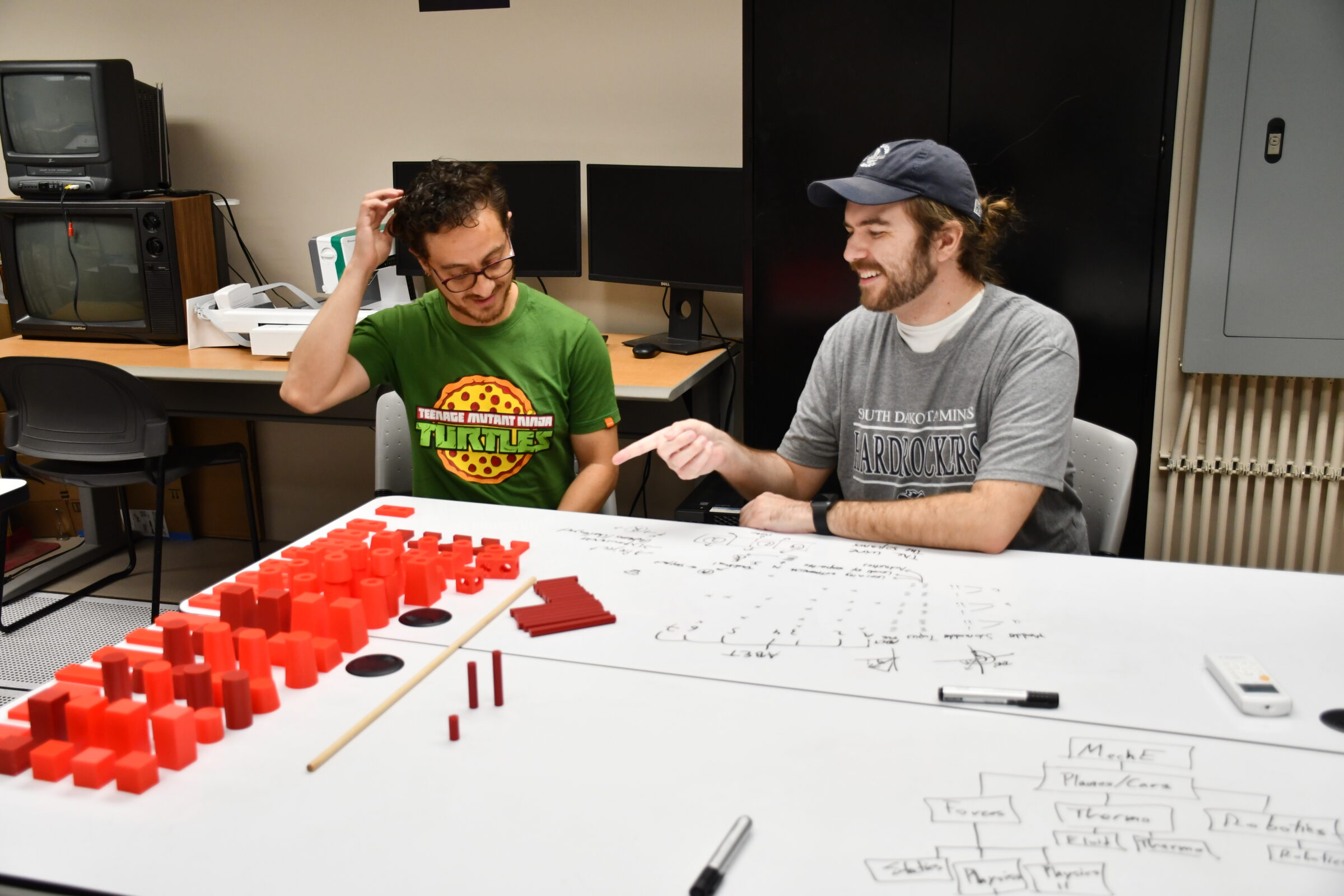
Marcus and Dr. Cristian Vargas Ordonez discussing research.
During his first semester, he made the Dean’s List.
Then he received a scholarship.
For Marcus, the scholarship represented more than financial support. It arrived at a moment when he was still carrying the same question that had followed him for years: Is college still the right place for someone my age?
The scholarship did not just help answer that question. It reminded him that someone else believed the answer was yes.
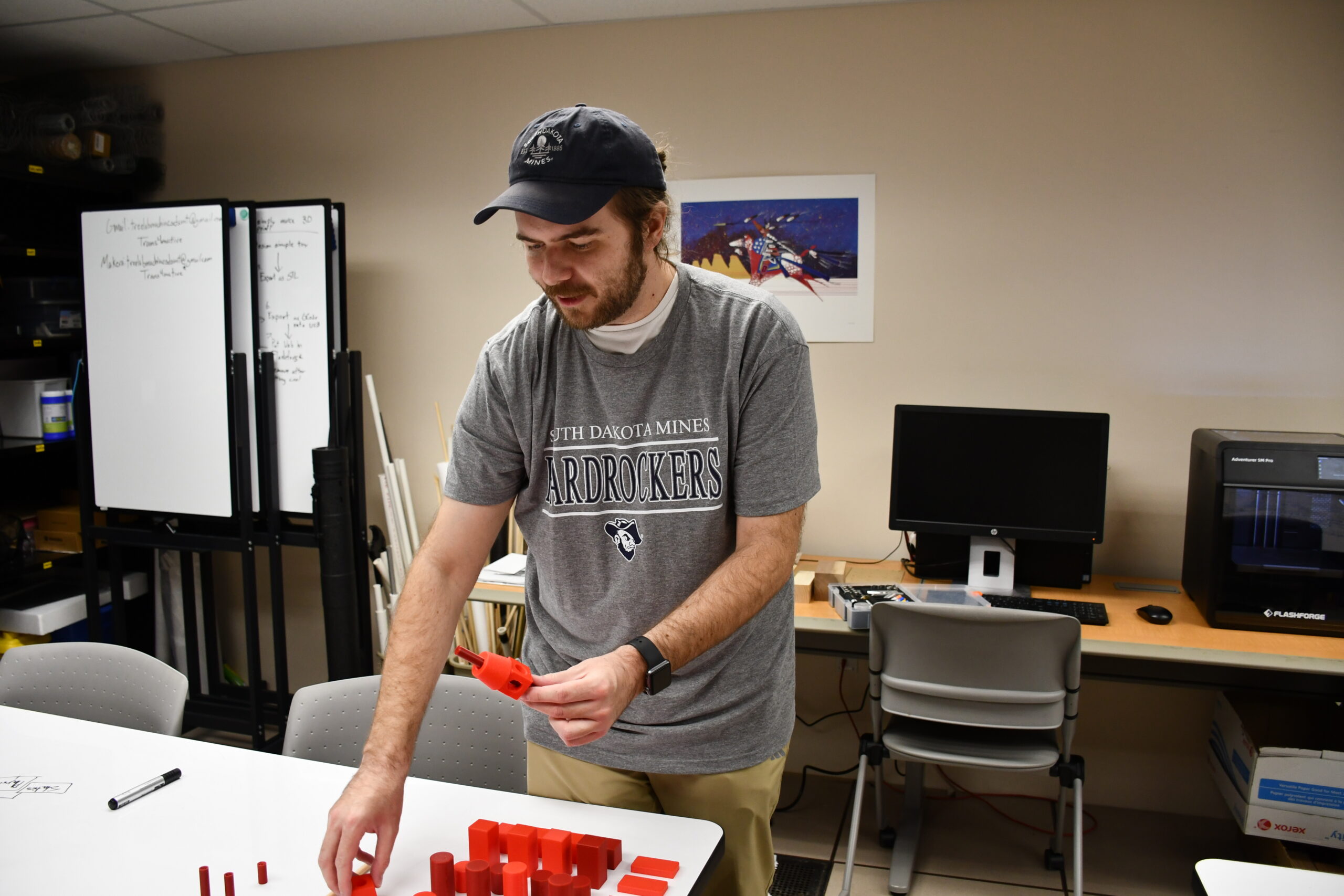
At Mines, Marcus began finding opportunities he could never have imagined while waiting tables. Dr. Cristian Vargas Ordonez offered him the chance to serve as a research liaison and teaching assistant. Over the summer, Marcus worked on a project designed to create universal toys that could help young children intuitively understand engineering concepts. His work included conducting interviews, managing student researchers, helping develop custom models, and bringing those models to life using both CNC machines and 3D printers.
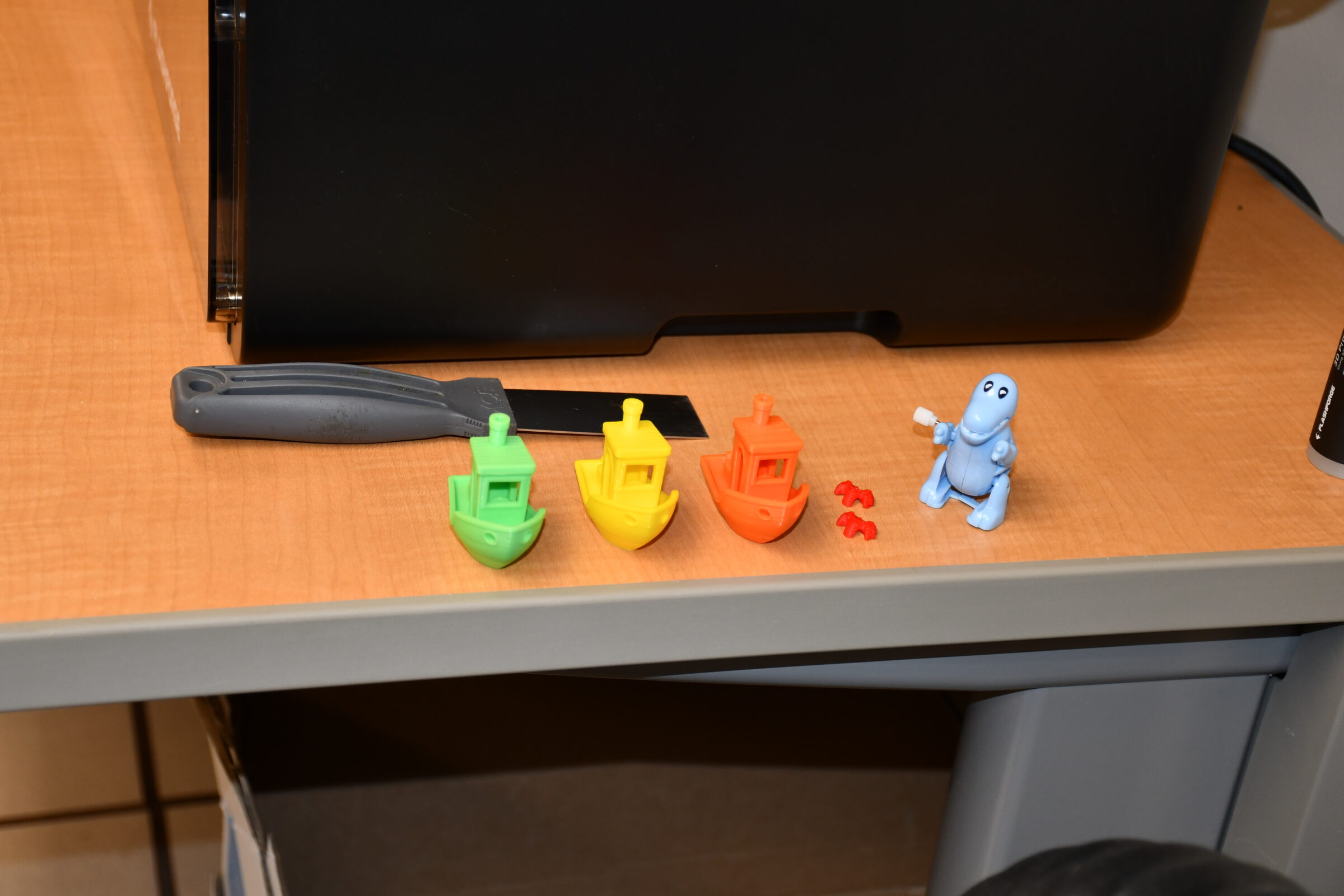
Engineering Toys Marcus assisted in designing.
For years, Marcus had been searching for a way to bring together his curiosity, creativity, and desire to help others. At Mines, those pieces began to fit.
But when Marcus talks about what has made him proudest, he does not immediately mention the research, the machines, or the opportunities that have opened before him.
He talks about another student.
During one project, Marcus watched a younger group member struggle. The student received a D on the first project. By the final project, with Marcus’s encouragement and support, that same student earned an A.
Not long ago, he had been the one searching for someone to help him see what he might become. Now, he was helping someone else find the confidence and motivation to keep going.
That experience has shaped the way Marcus sees his own future.
He is considering a career designing gyroscopes and robotic arms, work that could take him into the entertainment or biomedical industries. He is also interested in technical communications and advocacy, using his ability to understand complex ideas to help companies innovate and create a positive impact.
He does not yet know exactly where his path will lead.
But today, he sees possibilities where he once saw uncertainty.
“I never would have pictured myself as an educator or a liaison engineer,” Marcus said. “Yet the university has given me a myriad of routes for my future.”
For much of his life, Marcus wondered whether he had waited too long.
“It’s hard for post-traditional students like me to believe in ourselves when we compare ourselves to the average student at the university,” he said.
Marcus’s scholarship did more than help him afford an education. It came at a moment when he was still questioning whether he belonged in college at all. It gave him encouragement to keep going and reminded him that his work, and his future, mattered.
“I will always remember the moment of receiving the scholarship and its emotional weight,” he said. “I hope my story imparts how much generosity can mean to a student like me.”
Sometimes, a scholarship becomes more than financial assistance. Sometimes, it is proof that someone believes in you.
For Marcus, that belief helped turn years of uncertainty into opportunity.
And because someone chose to invest in that future, he is now imagining how he might one day do the same for someone else.
“Before coming to Mines, I wanted to help others in the ways I wished I had been helped. Now, I want to help others the way I have been helped.”