Alumni Spotlight – Lowery Smith (GeolE 51)
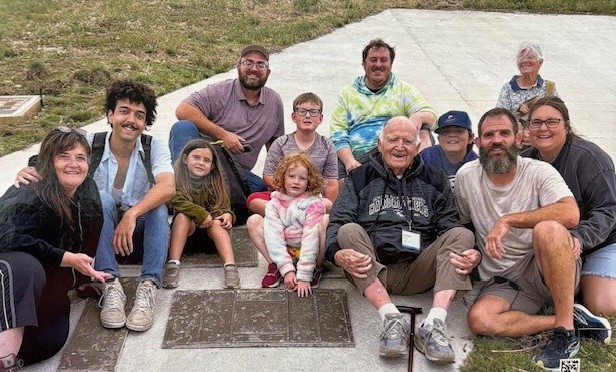
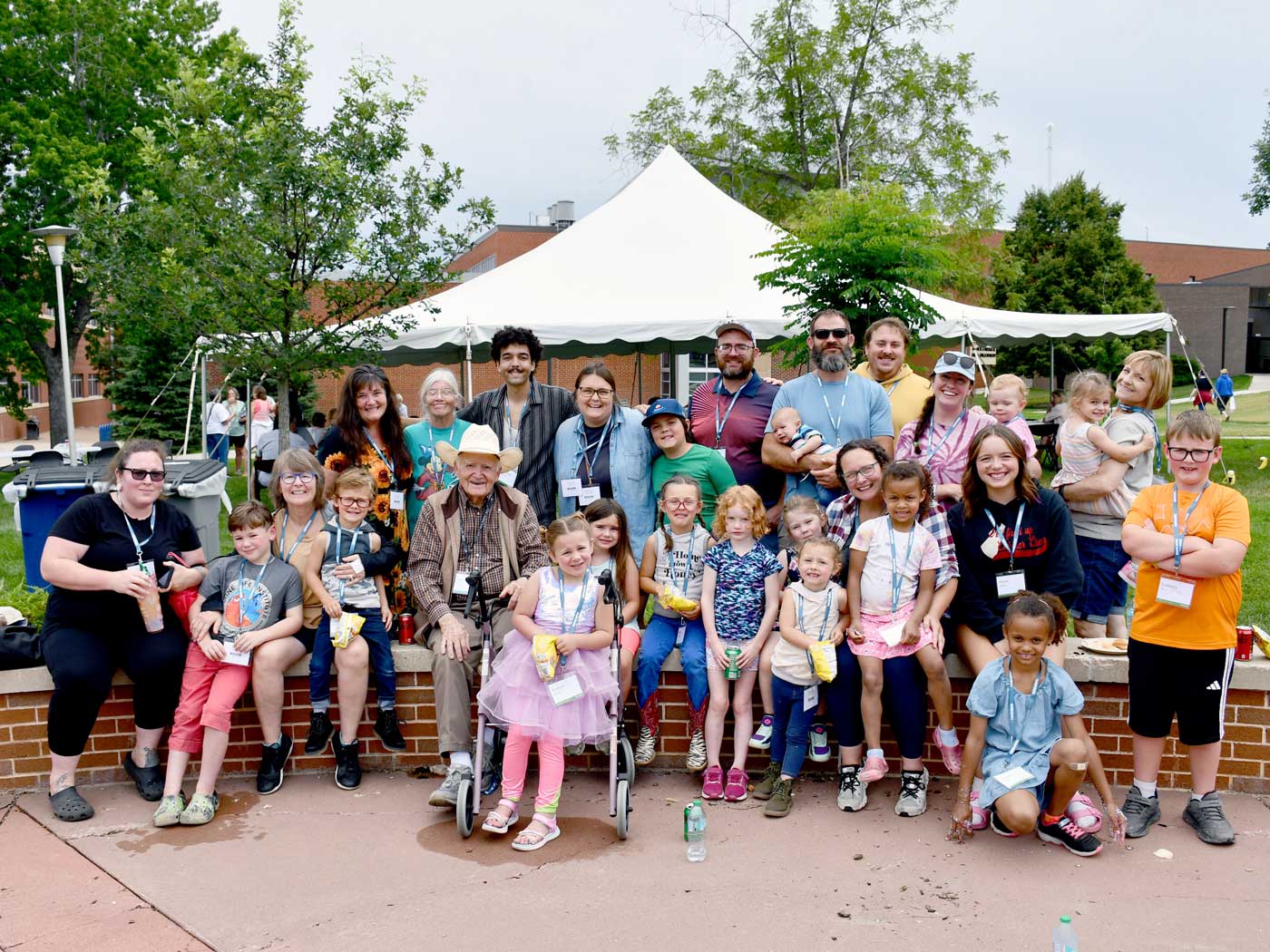
At 96 years old, Lowery Smith (GeolE 51) has lived through nearly a century of change, but some things remain constant. When he returned to South Dakota Mines for the all-school reunion this summer, he was reminded that while buildings may shift and faces come and go, Mines still feels like home.
Just weeks before the reunion, he competed in the National Senior Games, where he brought home silver medals in the shot put, discus, and javelin. It’s no small feat—and a reflection of the resilience and determination that first took root during his days as a Hardrocker student-athlete in the 1940s.
Early Days on Campus
Like many of his generation, Lowery’s college years began under unusual circumstances. Housing was scarce in the aftermath of World War II, and his first “dormitory” was the wrestling room, where 20 students slept in bunk beds lined up wall-to-wall. “There certainly wasn’t much privacy,” he recalled with a laugh. Meals were scattered wherever they could find them, and showers were down the hall. Eventually, he moved into the dorms, where he roomed with Bruce Walker of Sturgis, who later became president of the Sturgis Bank.
The O’Harra Building was the hub of activity then—home not only to classes, but also the library. The stadium nearby was a favorite spot. “It hadn’t changed much,” he said, “but being able to sit in your car and watch a game—that was unique.”
Brotherhood and Lasting Friendships
Much of his Mines experience was shaped by the bonds of fraternity and friendship. As a member of Theta Tau, he endured (and later laughed about) the quirky traditions of initiation, like being blindfolded and asked to dip his hand into a toilet filled with bananas. But the real gift was the friendships that endured across decades.
One of his closest friends, Howard Peterson, became a lifelong companion. They stayed in touch long after graduation, and he even gave Peterson’s eulogy years later. When he returned to campus for the reunion this summer, he visited Peterson’s gravesite to pay his respects—a quiet reminder of the enduring relationships forged at Mines.
Football, Physics, and Finding a Way
Student life in the 1940s carried its own challenges. With many veterans returning from the war, the campus was filled with older students who had seen the world. “I played football, but we didn’t have enough players for offense and defense,” he remembered. “We just did what we could.” He once broke his nose on the field, only for the coach to straighten it on the sideline before sending him back in.
Academics also tested him. Dyslexia made reading difficult, and he often relied on the encouragement of faculty. During his junior year, when passing physics was the only way to keep competing in athletics, a fellow student appeared unexpectedly to tutor him for weeks. He never knew the student’s name, but the gift of that time and support allowed him to succeed. “I wouldn’t have made it on my own,” he said.
Building a Life and Career
After graduating in 1949, his Mines foundation took him far. He pursued five careers over the decades, from geology to sales and marketing of aggregates and chemistry. A national geology meeting arranged by Dr. Paul Gries, then head of the department, led to interviews that launched his career with Exxon. His work took him across the country and the world, but he always credited Mines with giving him the foundation he needed.
Family was equally central. He married Jane in 1950, and together they welcomed five children by the time he was 28, including a set of twins. Later in life, he married Mary Anne, with whom he shared rich experiences until her passing just over a year ago. The loss was profound, but he found purpose in athletics and writing, channeling his energy into the Senior Games and blogging for his family.
A Foundation for Life
Looking back, he sees Mines as more than a school—it was the beginning of a lifelong journey of growth and adaptation. “It’s sort of like building a building,” he said. “Mines was my foundation. It gave me a good education, but it also gave me relationships and the ability to adapt.”
That theme of transition—moving from one phase of life to another—has become central to how he encourages today’s students. “The new students are transitioning from high school into a new environment. You need to find your way through and adapt to whatever comes your way. This is a new transition, but at your age, it’s a foundation for the rest of your life.”
Lifelong Learning
Even at 96, he remains a student of the world. He marvels at how knowledge has advanced since his first geology class, where tectonic plates were still just a theory. “Whatever they study today, education has to be lifelong. Keep learning. This is just another phase of gaining more knowledge.”
For Lowery, South Dakota Mines is not just a memory of the past—it’s a continuing source of strength, community, and inspiration. And as he stood once more on campus this summer, it was clear: no matter how much the world changes, Mines will always feel like home.