
Alumni Spotlight – Randy Parcel (MineE 67) and Marv Truhe (ME 67)
When Randy Parcel (MineE 67) and Marv Truhe (ME 67) met at South Dakota Mines over 60 years ago, they couldn’t have imagined that their bond—first forged in a debate team meeting and strengthened through lifelong friendship—would one day rekindle a tradition that could shape generations of engineers and scientists to come.
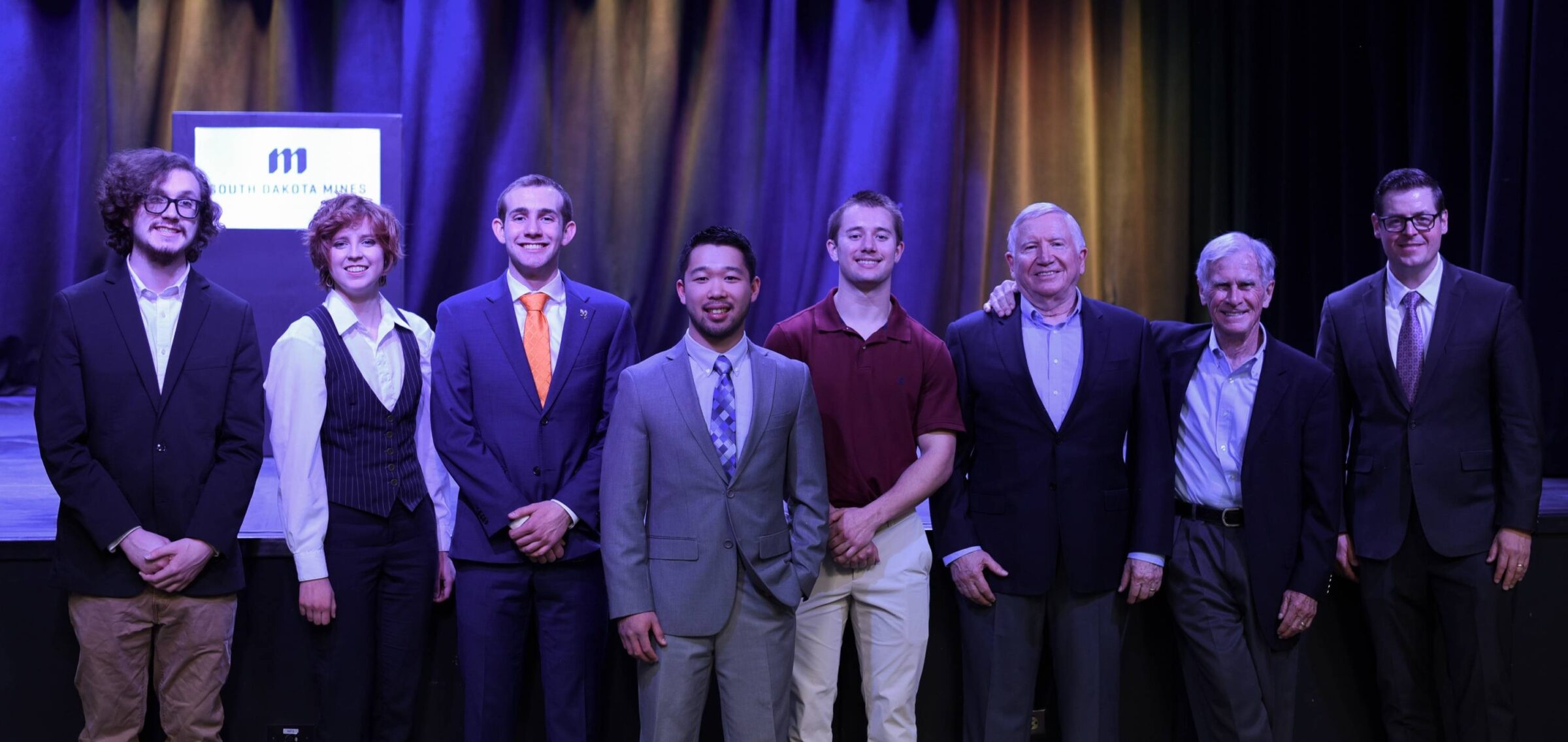
This spring, the university held the inaugural Howard Wells Speaking Competition, a student speech contest named in honor of the beloved coach who once guided a passionate, tight-knit group of student debaters—including Parcel and Truhe—through tournaments across the country. The event marked not just a celebration of communication, but the revival of a skillset often overlooked in technical education: the power of persuasive, clear speech.
“It was incredible,” said Parcel. “The presentations were all different—no rubber stamping. I was tickled to death to see so many people show up.”
Both Parcel and Truhe credit their debate experiences at Mines with shaping their careers in law and leadership. Truhe, who grew up on a farm near Winner, South Dakota, described his arrival at Mines as transformative. “It was a whole different story than high school,” he recalled. “I was stimulated here—and I learned how to study.” He would go on to practice law serve on the South Dakota Mines Foundation Board for nearly two decades.
Parcel, originally from Aberdeen, South Dakota, initially eyed MIT but changed direction after a chance encounter with a Mines recruiter. His journey took him from the speech team to a law practice in Denver, eventually leading to a role as general counsel and vice president in the mining industry. He credits the analytical rigor and communication skills fostered at Mines for that trajectory.
The spark to reintroduce a speaking competition came from Amanda Barnes, associate vice president for philanthropy, who discovered their debate team endowment, which had gone inactive. Inspired by similar initiatives at other institutions, she saw a unique opportunity to both honor Parcel and Truhe and empower current students.
Dr. Kyle Knight, head of the Department of Humanities and Social Sciences, said the competition represents a meaningful bridge between technical learning and essential communication skills. “We have a great group—very collegial—they support each other,” Knight said. “This isn’t just about celebrating our alumni; it’s about showing our current students that written and oral communication are just as critical as technical expertise. These are skills that will benefit them for their entire careers.”
Knight also emphasized that the university already embeds STEM communication into the curriculum, requiring students to present solo and in groups over two semesters. “Our faculty take that work seriously,” he said. “This competition builds on that foundation and adds another layer of professional development.”
The Howard Wells Speaking Competition was funded through the Center for Alumni Relations & Advancement (CARA), drawing on the long-standing Howard Wells endowment. For Truhe and Parcel, it was essential that students today have the same chance to build confidence and connection through speech.
“This is more than just one night,” said Parcel. “It’s like planting a bag of seeds—when word gets out, conversations start, and more students might say, ‘I can do that.’”
For Truhe, who described Howard Wells as the heart and soul of their team, the event was deeply personal. “We all went to him for advice. He had no children, but he adopted us all,” he said. “He’s the reason we had the success we did.”
The competition showcased not only student talent, but also a rekindled vision: a future where Mines students are not only technically proficient, but poised, persuasive, and ready to lead. Parcel hopes this is just the beginning: “I’d love to see a full forensics program grow out of this.”
Until then, both alumni are proud to see the skills they developed decades ago come full circle.
“Look for opportunities beyond your classes,” Parcel advised students. “Join things, meet people, broaden your world—you’ll not only make school more fun, you’ll be a stronger candidate when you graduate.”